
April 2026
Blueprint for Best in Class
Each month NPTC President and CEO Gary Petty writes a column in Fleet Owner magazine that focuses on the individuals, companies, best practices, and resources that make private trucking the force that it is in the American economy. Reaching more than 100,000 subscribers, three-quarters of whom are private fleet professionals, this column provides an excellent forum to communicate the value of the private fleet. Click here to view the archive.

Gary Petty | gpetty@nptc.org | Private Fleet Editor for FleetOwner Magazine
Gary Petty has more than 30 years of experience as CEO of national trade associations in the trucking industry. He has been the president and CEO of the National Private Truck Council since 2001.

Success depends less on ownership itself and more on disciplined network design, contract strategy, technology deployment, and people development.
CARLTON HUFFMAN, CTP, SVP of transportation and logistics at PrimeSource Building Products, who turned a chance introduction to logistics into a private‑fleet playbook, didn’t arrive at Auburn University with a road map. A Southern kid with broad academic interests and a passion for athletics, he enrolled undecided and worked his way through school for a small local household‑goods moving company. A professor from Auburn’s newly formed Department of Supply Chain Management hired that mover and encouraged Huffman to explore the field. He found his calling, earning a B.S. in Business and Logistics Management in 2001.
What began as hands‑on work evolved into a 25‑year career focused on enterprise‑wide logistics transformation for manufacturing and distribution networks. Over time, his responsibilities broadened to include fleet strategy, carrier management, distribution center operations, and cross‑functional integration. His path ran through private fleets, dedicated carriers, 3PLs, and warehousing—in roles that exposed him to mergers and acquisitions, network redesign, and the operational trade‑offs that determine cost, service, and safety.
Professional development and talent pipelines are central to Huffman’s approach. He attended the National Private Truck Council’s Private Fleet Management Institute (PFMI) and earned his Certified Transportation Professional (CTP) designation in 2011. Those credentials plus earning an MBA and two other professional certifications reflect both classroom learning and a practical appetite for continuous improvements that he has sought to replicate across his teams.
Huffman joined PrimeSource Building Products (PSBP) in 2023 as the company’s senior vice president of transportation and logistics, with responsibility for transitioning the company’s dedicated‑carrier network to a private fleet while scaling service nationally.
Huffman enhanced PSBP’s private fleet through scheduling, trailer staging, localized routing nuances, and seasonal demand, all of which require coordinated systems and disciplined execution. To meet those demands, he built a full leadership bench while integrating training pathways such as PFMI and CTP to raise organizational baseline competencies.
The performance improvements made under Huffman’s tenure are noteworthy because they reflect both strategic choices and operational discipline. Two themes underpin those results. First, the decision to operate a private fleet was not treated as an endpoint but as a platform for disciplined process and continuous improvement, allowing PSBP to control service quality while optimizing cost to serve. Second, people and training mattered: By formalizing development pathways and promoting from within, Huffman created institutional knowledge that translated analytical strategy into consistent operational performance.
His career underscores a practical lesson for companies weighing private fleet ownership: Success depends less on ownership itself and more on disciplined network design, con‑ tract strategy, technology deployment, and people development. When those elements align and are executed with rigor, a private fleet can shift from a cost center to a strategic advantage—delivering higher service, lower variability, and a stronger platform for growth.
Looking ahead, Huffman is focused on embedding continuous improvement into PSBP’s operating model. That includes further leveraging telematics and TMS integrations to enable dynamic routing, expanding predictive maintenance to reduce downtime, and continuing to refine trailer pools and staging to minimize detention and dwell. He is also committed to leaders and the talent pipeline—expanding PFMI and CTP participation, mentoring aspiring leaders, and building cross‑functional rotations that expose logistics staff to procurement, sales, and operations planning.
“The CTP program is a key component of our success and has given us a pathway to skills, knowledge, benchmarking, and networking within the NPTC culture—a foundation in building the fleet from the ground up to great success,” Huffman said.
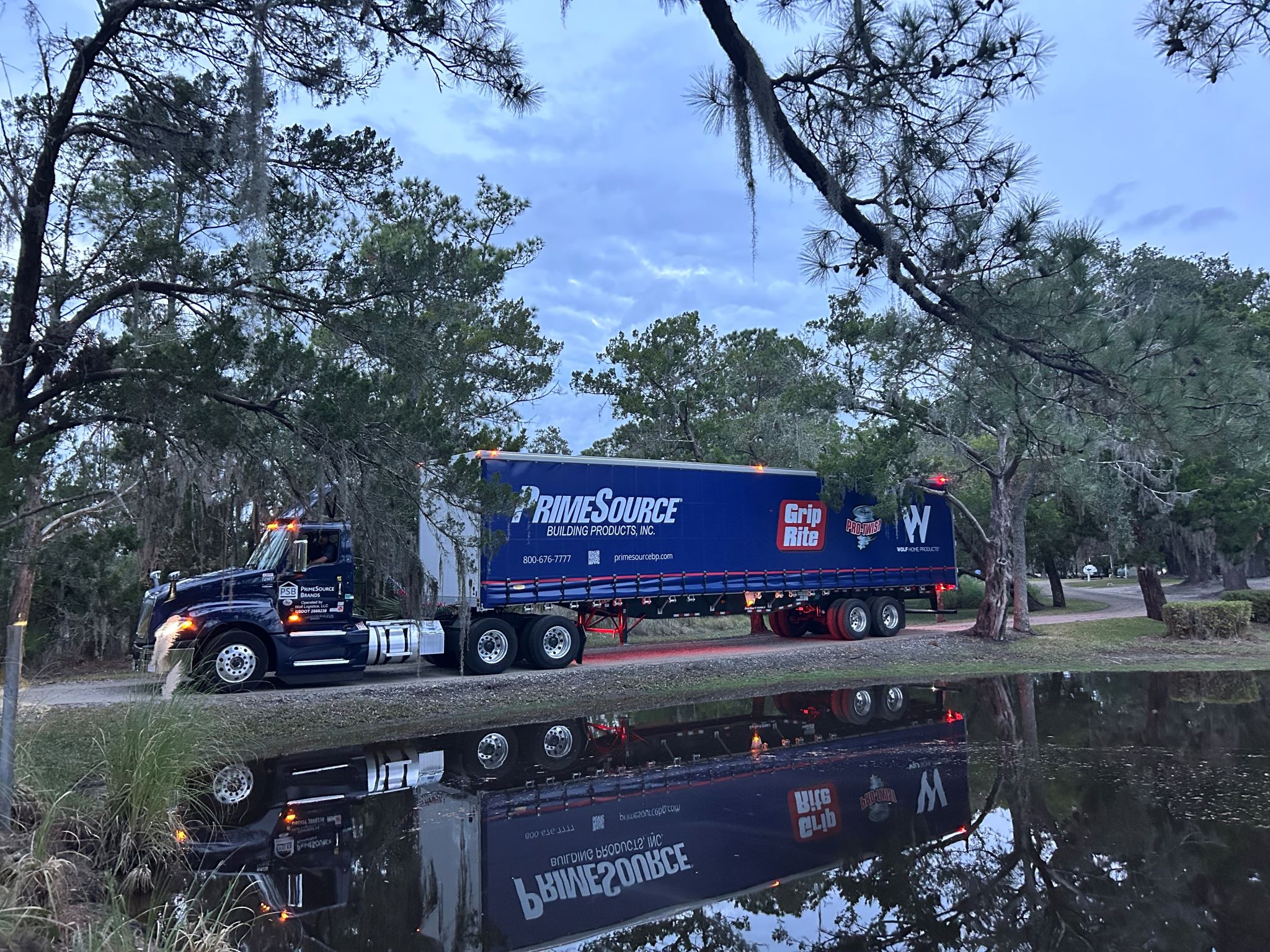
Photo: National Private Truck Council